
Yes. A 3D-printed gun mount is strong enough to hold a loaded rifle, shotgun or pistol on a wall for years — if it's printed in the right material, with thick walls, and the load runs along the print layers instead of across them. We've shipped over 280,000 mounts since 2016 and the ones that come back broken are the ones that got run over, not the ones holding guns.
The question is fair, though. Most people's experience of 3D printing is a brittle desk toy that snapped in a drawer. So here's what actually determines whether a printed mount holds, and the numbers we publish on ours.
What makes a printed part strong (or not)
Four things, in order of how much they matter:
1. Material. This is most of it. PLA — the default filament in every hobby printer — is stiff but brittle, and it starts to soften around 130 °F, which a garage or a truck cab reaches in July. ABS is tougher but shrinks and cracks as it cools, and it's hard to print thick parts without internal stress. We print everything in PETG: it bends before it breaks, it's rated to 150 °F, and it holds its properties for years. Nylon and carbon-filled filaments are stronger still, but they cost several times more and the extra strength doesn't change anything for a part that's already holding ten times its load.
2. Wall thickness and geometry. Strength comes from the walls, not the fill. A printed part is a shell with a lattice inside; the shell carries the load. Thick walls, generous radii in the corners, and a cross-section sized for the gun it holds matter far more than how dense the inside is. Asking for "100% infill" mostly adds weight.
3. Print orientation. A printed part is strongest along its layers and weakest across them, the way wood is strong along the grain. Every Spartan mount is oriented so the weight of the firearm pulls along the layers, not across the layer lines.
4. Design for the load. A wall mount is a static-load part: the gun sits in it. That's the easy case. Things get harder when a part sees torque or impact — our vise blocks take muzzle-device torque, and the first version broke. We redesigned them with roughly 50% more internal strength — thicker walls and a dense gyroid core — and they carry a lifetime warranty now.
The numbers we publish
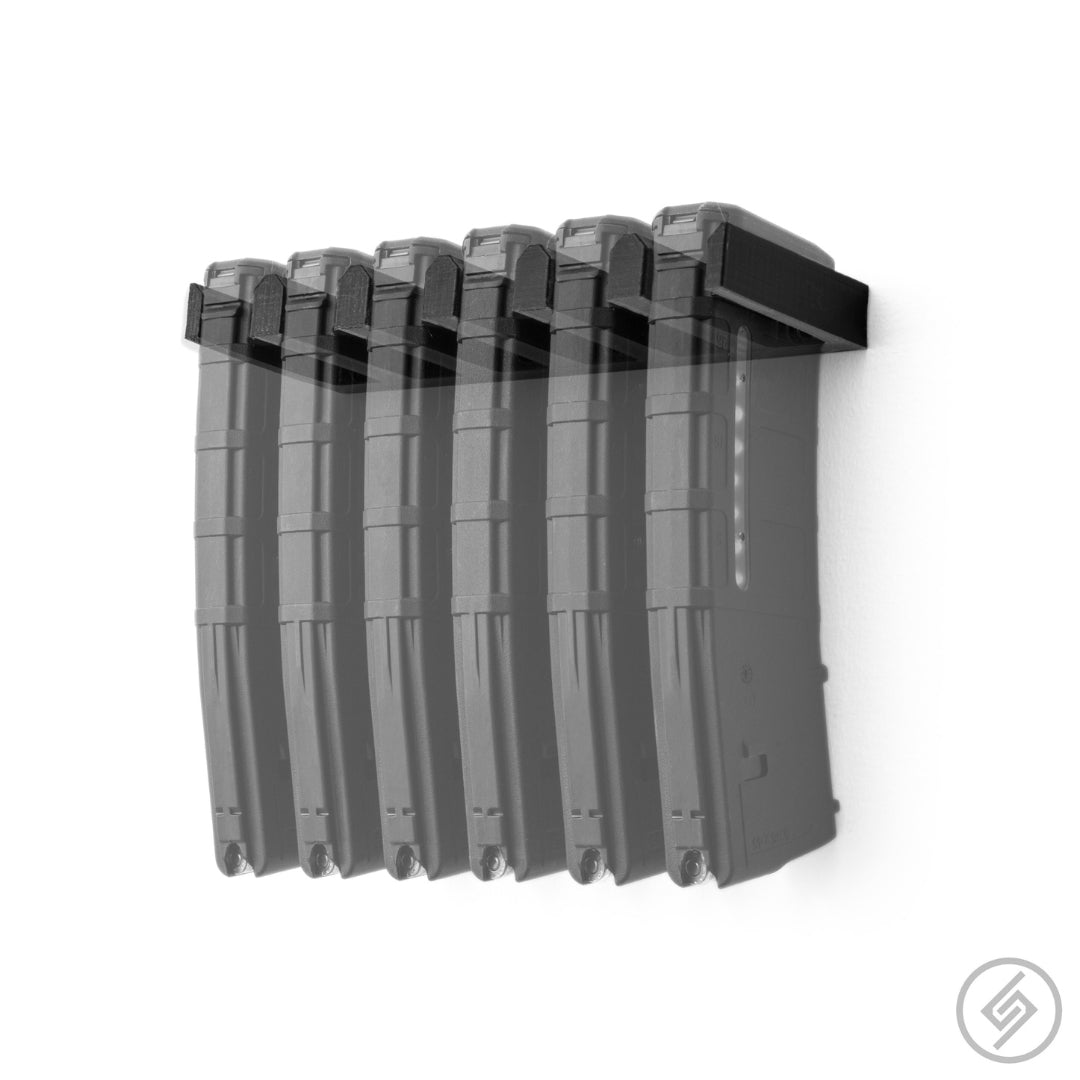
Every product page lists a rated load in the specs. The rule behind it is simple: the rating is at least five times the weight of what the mount holds, with a 15 lb floor, because the mounts are designed to carry about ten times their object's weight and we publish half of that. A magazine rack's rating is the loaded weight of the magazines it holds, times five.
Some reference points:
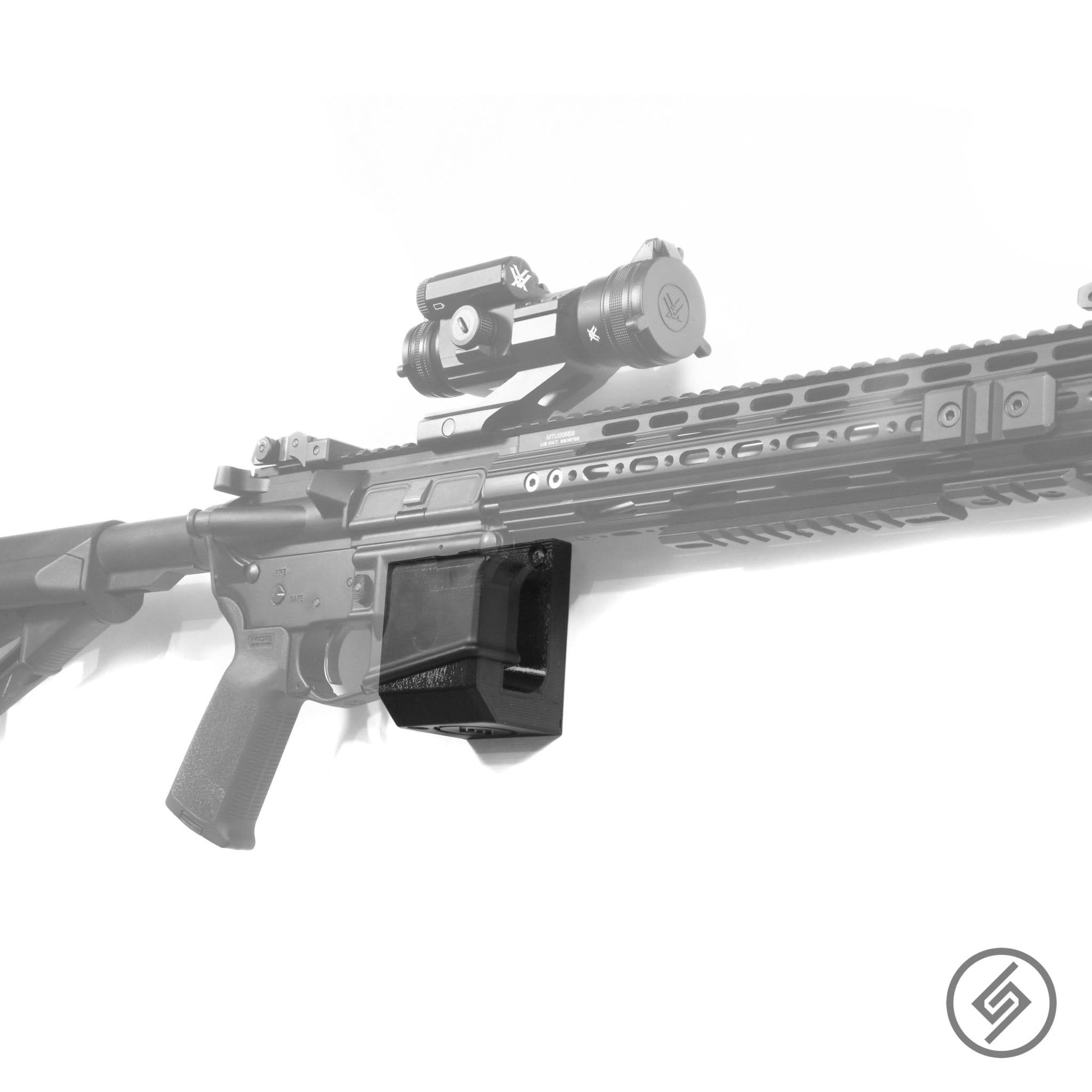
- Standard AR-15 mount: rated over 50 lb; a loaded AR with optics is 8–10 lb.
- AICS / precision rifle mounts: 75–150+ lb, for rifles that weigh 15–25 lb loaded.
- Universal rifle hook: 40 lb. Rifle dock: 30 lb. Ammo can mount: 50 lb.
We have hung 140 lb off the standard AR-15 mount installed on two drywall anchors. The drywall itself gave out — not the anchors, and not the plastic.
The wall is the weak link, not the mount
In practice the thing that fails is never the PETG; it's the drywall. So the mount's rating assumes the mount is fastened properly, and we publish a separate number for drywall:
- Two top-row holes with the included anchors: 25 lb.
- Three top-row holes with anchors: 35 lb.
- Into a stud, or onto a SpartanGrid steel panel: the full rated load.
The lower holes on a mount sit near the pivot and don't add holding power; only the top row counts. If you're hanging anything heavier than a carbine, find a stud.
Does it weaken over time?
No. PETG doesn't creep or get brittle at room temperature the way PLA does, it doesn't absorb enough moisture to matter, and UV only affects it if it's in direct sun for years. Mounts we shipped in 2017 are still on walls. Heat is the only real limit: keep PETG under 150 °F, which rules out a dashboard in Arizona but not a garage, a safe, or a truck cab.
Printed vs. injection-molded
People sometimes assume molded plastic is "real" and printed plastic is a prototype. For a mount, the opposite tradeoff applies. Molding is only economical in volumes of tens of thousands per design, so a molded mount is a universal shape that approximates a lot of guns. Printing lets us make a mount for one magwell — 322 designs and counting — and change it the week a new gun ships. The material is the same class of polymer either way.
What we'd tell you if you print your own
If you want to print a mount from a file you found, do it in PETG or better, 4+ perimeters, orient the part so the gun's weight runs along the layers, and don't trust a design that uses a thin tab in bending. Then hang it on a stud and load it with twice what you intend to store before you put a firearm on it. That's what we do, at a slightly larger scale.
FAQ
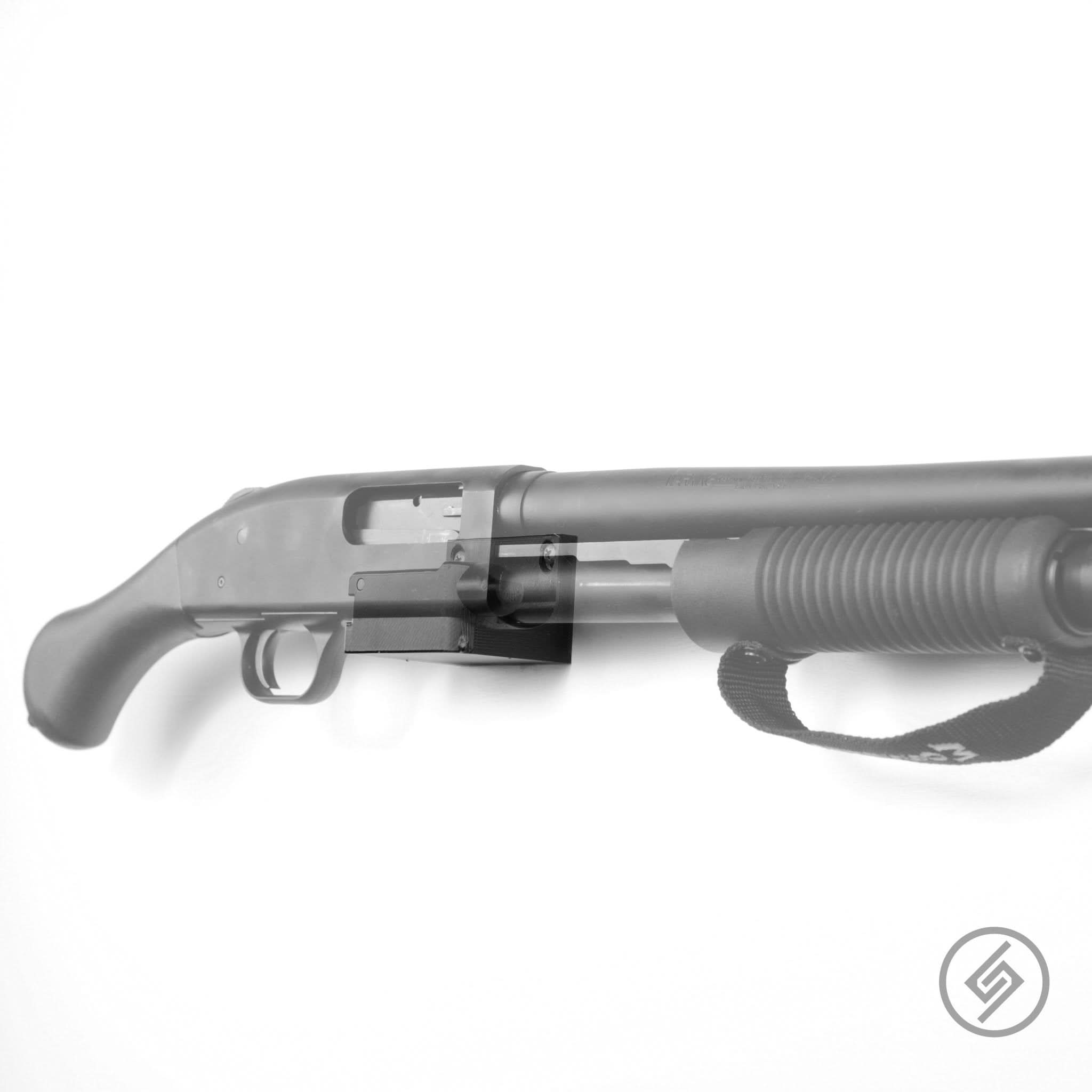
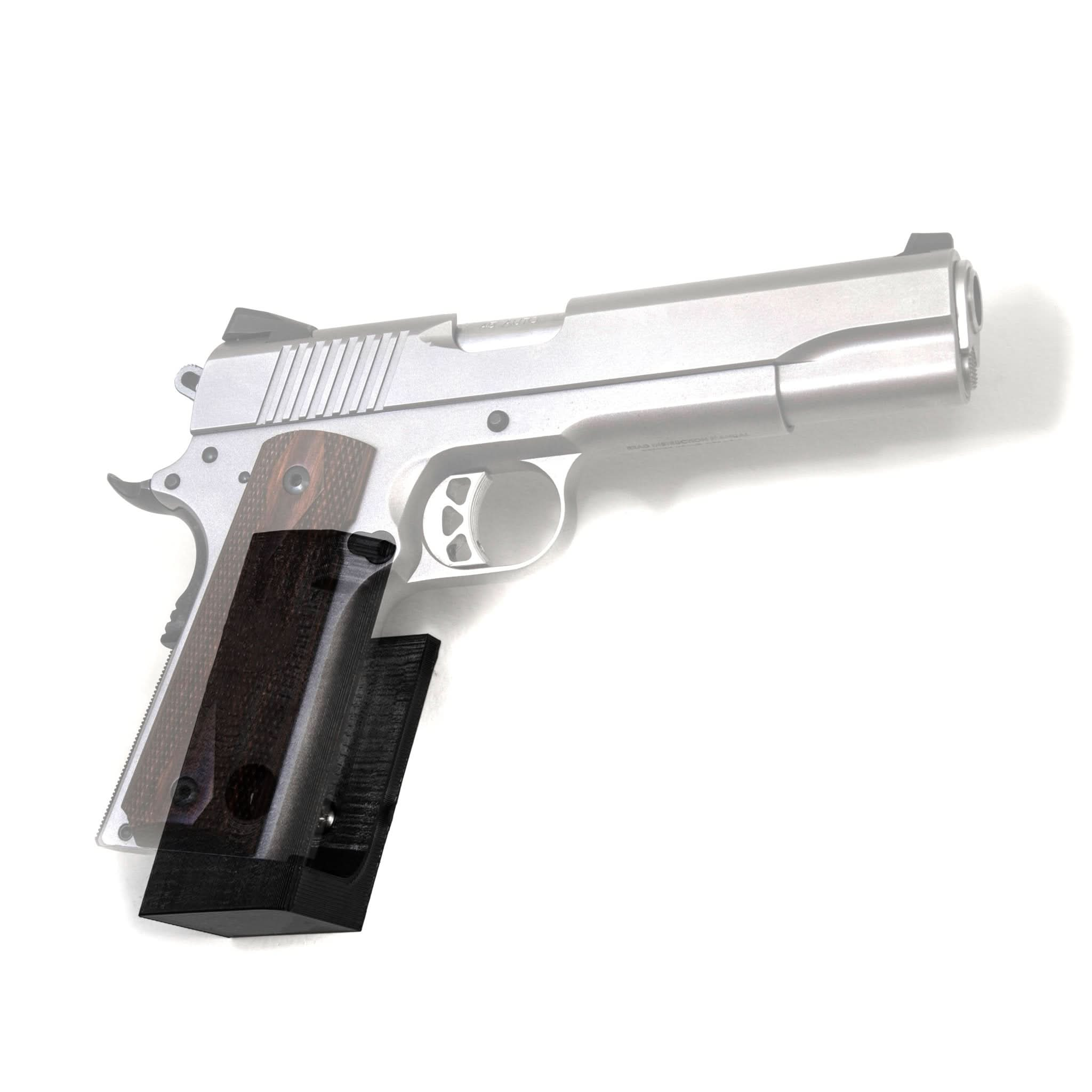
Are 3D-printed gun mounts strong enough to hold a loaded rifle? Yes. Printed in PETG with thick walls and the load along the layers, a Spartan mount is rated to at least five times the weight it holds — the standard AR-15 mount over 50 lb for an 8–10 lb rifle.
What material are Spartan mounts made of? High-strength PETG, rated to 150 °F, chosen over ABS for impact resistance and over PLA because PLA softens in heat and goes brittle.
How much weight can a 3D-printed mount hold in drywall? 25 lb with two top-row drywall anchors, 35 lb with three. Into a stud or a SpartanGrid panel, the mount's full rated load applies.
Do 3D-printed mounts get brittle over time? Not PETG. It doesn't creep or embrittle at room temperature; mounts shipped in 2017 are still in service. Keep it under 150 °F.
Fit, mounting and loaded-storage questions? See the Spartan Mounts FAQ.
Smart Storage Ideas for Your Workshop
Gun Wall Panel Systems Compared: SpartanGrid vs Gallow, Hold Up Displays, Tactical Walls, Savior and SecureIt